Saturday, August 26, 2017

Hokkaido Milk Bread

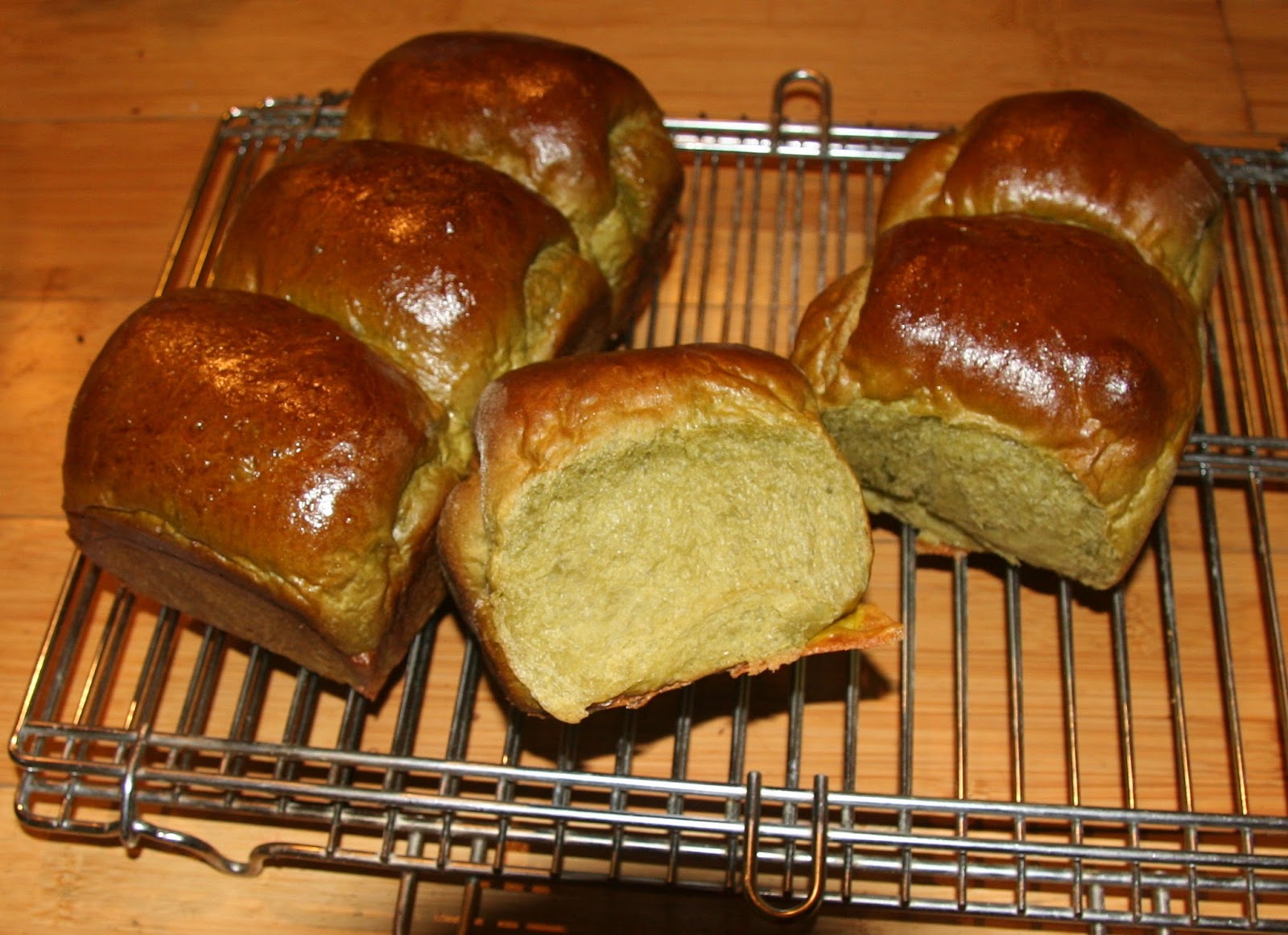
Always wanted to try this technique and when I found a recipe for Matcha Hokkaido Milk Bread I knew I had to try it out. Matcha is the Japanese powdered Green Tea and it just happened that I had some, since Green Tea Ice Cream is one of our indulgences.

The recipe was from the Bakeansita and can be found here. 

Making the tangzhong was simple, but does require constant stirring so that the paste does not burn as it thickens.

Followed the recipe instructions for using a bread machine to make the dough. Here is the final result, light airy, great flavor bread. 

From the oven

Crumb shot
 

Sunday, July 2, 2017

TODAY'S BAKE

Got motivated today as yesterday's birthday gifts included two 5qt Lodge Dutch Ovens. These have the side handles on the lid, so you can use them upside down. Should be much easier to place the loaf on the lid and then cover with the oven. More information.

The Bread

Had too much going on the day before so was unable to refresh my levain and build a starter and overnight loaf, so I made it easy with Ken Forkish's Saturday White Bread, from Flour, Water, Salt, Yeast. Substituted 10% Whole Wheat to give a little more fiber and flavor.

Found the new Dutch Ovens easy to use and very pleased with the final result.
Saturday White Bread with 10% Whole Wheat

And yet another 

Had a desire for something sweet. One of my favorite breads when eating at an Indian Restaurant is Peshwari Naan.  Also known as Pashawari Naan, it is named after the region on India where it originated. This is Naan stuffed with raisins, nuts and spices.

For the filling, I used raisins, pine nuts, dried coconut with cardamon and mace. Ground them to a course mix in a small food processor.

The recipe came from an internet search.The basic Naan bread is rolled out into a circle, the chopped filling put on top, then the edges folded over like an envelope. The package is then turned over and rolled out into a rough circle or teardrop shape.

Baking is under the broiler, so watching for the desired level of 'brown' is important.


Naan rolled out
Filling added

Folded up

Final shape

 Finished Peshwari Naan

Monday, March 27, 2017

SPENT GRAIN - PART 3

Had some more spent grain gifted last week. Decided to dry some first to establish the water content. Weighed the rest out into 250g packs so they are pre-weighed for the recipe.

Drying was an eye opener. In 250g there is 187g of water. No wonder the last batch was so wet!

Reducing the water to 615g in the base dough meant that the final dough would have a hydration of 80%. Much easier dough to work with. Based  on the spent grains water content I estimate that the part 2 batch was about 85% hydration, which explains why it was so hard to finally shape.

Both loaves came out of the oven looking good, with good oven spring . The first loaf got away from me! My wife grabbed it for a gift before I could photograph it.

Nice oven spring

Here is the second loaf on the cooling rack.


Chewy crust, soft crumb.
 

 Ahh! Fresh bread with just a smear of butter.

Sunday, January 22, 2017

SPENT GRAIN - PART 2

Some more digging on Google turned up a recipe for Natural Sourdough with Spent Beer Grains.

Used my levain from Ken Forkish's Flour, Water, Salt, Yeast to make the stiff levain. Followed the recipe, including the times, with the exception of reducing the water to 700g. My previous experience was that the spent grains added a lot more water and I wanted to be able to control the hydration. In this recipe the spent grains are added part way through the stretch and fold process. So I started out at a 70% hydration.

Once the spent grains were added, it was obvious that I had a wet dough, but decided to leave it and just add flour as needed when shaping before the final proof.  On refection, perhaps I need to take 100g of spent grain, dry it out and figure the actual water content. The recipe calls for 250g of spent grains, so if the water content is at 50% then I'm adding another 125g of water for a final hydration of 82.5%.

Made two batches so that I would have four loaves, some to give away to the donor of the spent grains.

Proofed two loaves in bannetons, two in linen lined baskets. No apparent difference in the final proof. Not too happy with the minimal oven spring, but the final product is a hearty loaf, good crunchy crust, soft crumb. Here is the result:

Friday, January 20, 2017

EXPERIMENTS WITH SPENT GRAIN

What is Spent Grain?

Beer is liquid bread! After all, beer shares three of the four bread ingredients - grain, water, yeast. The big difference is the grain is not milled into flour but malted (sprouted) to provide the complex carbohydrates and sugars needed for brewing. The grain is first steeped in water to raise the moisture level to allow the breakdown of the starches and proteins. After steeping, the grain is allowed to germinate allowing for further breakdown of the protein and carbohydrate. Germination is halted by drying so that the growing is stopped, creating the starch reserves needed for brewing.

The grain is boiled with water to extract the sugars and flavors into a liquid known as wort, which is then fermented into beer. The wort is filtered off the grains and what is left is a wet pile of grain. The spent grain becomes a by-product of the brewing process, often discarded or used for animal feed. 

The wet spent grains.
I was fortunate to get two 1 gallon bags of spent grain from a friend who is beginning to establish a micro brewery in a nearby town.  The actual grain mixture was 90.3% Pale malt, 2.4% Caramel malt, 3.6% White wheat malt and 3.6% Caraphils. All the malts, with the exception of the White wheat are made from barley, the difference being in how they are treated after germination in the drying process.

 First Bake

An internet search provided several recipes, most associated with home brewing sites. I selected one that used wet grain from this site.


Recipe
3 cup Spent grain - wet
1 1/4 cup Warm water
1/4 cup Sugar
4-5 cup AP flour
1 tsp Salt
1 Egg
1/4cup Milk
1 tbsp Instant Dry Yeast

Obviously the amount of water in the grain is an unknown variable, and I finished up adding a further 1 1/2 cups of AP flour. 

The loaves
Final proof was in bannetons and baked at 475oF in a dutch oven for 30 minutes covered and 25 minutes uncovered. The loaves were dense, chewy with a great toasted malt flavor.

Water content of the spent grains is obviously something to consider and likely to vary from batch to batch.

Crumb shot

Next up will be a Sourdough with spent grains from here.

Drying the Spent Grain

We put seeds in breads, so why not spent grains? Half the grains were spread on a rimmed baking sheet and dried in the oven. Perhaps a measure of the amount of water is that is took 3 days at 170oF to dry the grains out! 

Result was a great chewy crunch with a slightly sweet, malt flavor. Next time I make a whole wheat loaf, I am going to see what a cup full of dried spent grains will do to the flavor.

Dried spent grain


Saturday, September 3, 2016

CiabattAAAAH!

Last month, the Artisan's Bread Bakers Facebook page had Ciabatta as the "Bread of the Month". We are all encouraged to try the recipe and post the results. Ciabatta is Italian for slipper, probably named because of the long, wide, flat shape of the bread. These are high hydration loaves, this recipe has a 78% hydration.

The poolish after 14 hours
This recipe calls for an overnight poolish. Poolish is a slow ferment that adds flavor and complexity to the loaf. The recipe called for a 50/50 by weight mix of flour and water and a pinch of yeast. 14 hours later the poolish had a vigorous lot of fine bubbles breaking the surface and a pleasant, slightly sour odor. The rest of the flour, water, salt and yeast was added to the poolish and mixed with the dough hook. The final result was a very slack dough transferred to the proofing bin.

Thirty minutes rest followed by a stretch and fold saw the dough starting to develop. Three more rests and stretch and folds gave the gluten a good chance to develop and some large bubbles could be seen at the top of the dough. 

After a final 30 minute rest the dough is tipped out onto the bench. This is where things get interesting! When I made this two weeks ago for the first time I just made two large loaves. Big mistake! The loaves were too long for the baking stone and dripped over onto the racks. So this time I made two smaller loaves (about 12inches) two other 8 inch loaves and five buns. Much easier to handle and bake.

The final result

  CHALLAH DOGS

It's Labor Day weekend - time for cook outs, right? Well not this Saturday. Tropical Storm Hermine visited us last night and dumped five inches of rain and most of Saturday has been spoiled with showers. Already had the hot dogs in the refrigerator so time to experiment with a recipe I have eyed for some time. Hot dogs wrapped with challah bread dough.

Made a batch of my stand by challah dough, separated into 10 strands and spiral wrapped each hot dog. Finished with an egg wash and sesame seeds on half and poppy seeds on the rest.

25 minutes in a 350oF oven and out they came. Some went for supper, the rest in the freezer for later.
Challah Dogs


Sunday, August 7, 2016

BACK IN THE SWING OF THINGS

It's been unbearably hot in eastern North Carolina, so baking has been on the back burner for the past two months, except for my commitment of Challah for our local shul. 

But yesterday I got energized and put together two Overnight 40% Whole Wheat from Ken Forkish's Flour Water, Salt, Yeast, two loaves of Vogel's Bread and three Baguettes.

Overnight 40% Whole Wheat

Very pleased with this result, good oven spring, crisp, chewy crust, and soft crumb. Great flavor.


Crisp crust, soft crumb - delicious.


Vogel's Bread? Among other things it is the best selling bread in my home country of New Zealand. Created by a Swiss, Alfred Vogel who cared a lot about the enjoyment of good food and healthy living, believing that:
The best quality of life could be achieved by maintaining a well-balanced diet of wholesome natural foods.
And what better place to start than the ‘humble’ loaf? Alfred wanted to create bread full of wholesome and natural ingredients, making it simple and enjoyable for anyone and everyone to get essential nutrients into their everyday diet. So Vogel’s bread has been around for over 60 years now and baked in New Zealand since 1967.

Vogel's Bread
Essentially it's a multi-grain seeded loaf. Mine has 7 grain hot cereal, rolled oats, sunflower, pumpkin, flax and sesame seeds with 20% whole wheat flour. Here is a link to the recipe I used: Vogel's Bread. I used the 7 grain cereal in place of the kibbled wheat and rye. 

Cut into the Vogel's bread for a crumb shot, but did not try yet. Into the freezer for later in the week.


Vogel's Crumb


Baguettes were from a King Arthur recipe with an overnight retard in the refrigerator. Not at all happy with the result, so no photo. Recipe called for baking in a stoneware baguette baker, which I don't have. Tried baking in the oven on a stone with steam, but the crust did not crisp up, even with an additional five minutes. However, did make a great grilled Cuban sandwich from one of the baguettes, so all was not lost.

Sunday, May 1, 2016

NO MORE UNLEAVEN BREAD

Passover officially finished at sunset on Saturday so the matzah was put away and the levain came out of hiding.

First up into the oven were two loaves of Steel-cut Oat Bread. Used the recipe and instructions posted by pjkobulnicky at thefreshloaf.com. You can find the recipe using the link above.

I confess to cheating a little bit as I refreshed the starter on Friday night and made the dough on Saturday. But did not bake until after sundown.

Here is the finished result before cutting into the loaf:

Steel-cut Oat Bread

Got a surprise when I cut for the crumb shot. Although the loaves sounded hollow when they came out of the oven, the interior was still wet!

I can only think the steel cut oats I used (Bob's Red Mill) absorbed more water. When I went to drain and reserve the water from steeping the oats, very little water drained out.

When I shaped the loaves, they were easy to handle. The initial hydration was 70%. Did not measure how much of the strained water came out from the oats, but the initial mix was 600g boiling water and 300g oats. So there could have been upwards of another 400g of water bound in the oats when they were added to the dough. Baking was 30 minutes in a closed Dutch Oven followed by 30 minutes with the lid off at 475oF. Sunday morning I dropped them back in the oven at 475oF for 30 minutes. Still a little doughy after that so gave them another 15 minutes.

Here is the crumb shot after the second bake:
Steel Cut Oats - Crumb
 

Tried a slice after the loaf had cooled. Great crunch to the crust, soft, sweet crumb. Will just have to play around with the bake time in future.

Bake # 2 was Overnight Country Brown from Ken Forkish's Flour, Water, Salt, Yeast. Abject failure! Over-proofed and finished up with two pancake loaves that will make great croutons, but not much else. I'm embarrassed to post a picture!

And finally a batch of Ciabatta. Used the formula from Linda West Eckhardt and Dianna Collingsworth's Rustic European Breads for your Bread Machine and the last cup of levain. Mixed by hand and then three stretch and folds during the fermentation. Turned the dough out onto a floured surface, cut in two and roughly shaped to 4x10 inches. 30 minutes more proof, then stretched out to 6x12 inches. Final proof then baked 30 minutes in oven with steam at 475oF.

Ciabatta
 

Tuesday, March 22, 2016

FIGURING THINGS OUT

Seeded Rye Bread
A recent post on the Artisan Bread Bakers site gave a formula for a seeded rye bread. 

This was the formula:

INGREDIENTBAKERS %
Bread Flour83
Rye Flour17
Water63
Sugar4
Salt2
Yeast1
Caraway seed4

No instructions were given for mixing the dough. So time for some improvisation. Multiplying the baker's % by 10 gave me a start weight of 1,000g (830g bread flour and 170g rye flour).

Added the water (warmed to about 80oF) to the flours then mixed together in a tub with a dough whisk and left to autolyse for 30 minutes. 

After the autolyse the other ingredients were added and mixed by hand until all were incorporated. Over the next two hours performed a stretch and fold every 30 minutes for a total of four stretch and folds.

At the end of the 2 hours, placed the tub in the oven at the proofing setting for 1 hour. Dough had doubled by that point. Did one final stretch and fold then divided the dough into two. Shaped each into a boule and placed in bannetons. Placed the bannetons in the fridge to retard overnight.

This morning the boules had risen almost to the top of the bannetons after about a 12 hour retard.  Baked both loaves in the dutch oven at 475oF covered for 30 minutes, then uncovered for 20 minutes.

Final result was good oven spring and color. After cooling cut one loaf for a crumb shot. Very happy with the outcome, but will probably cut the yeast in half next time and retard for a longer time.


Good looking bread!


Sunday, March 6, 2016

MARCH BREAD OF THE MONTH

This month's Bread of the Month for the Artisan Bread Bakers Facebook group is Tartine's Olive Oil Brioche. I've always wanted to make a brioche, ever since I lived in Paris.

The recipe calls for 1,000g of flour and a stand mixer. Final dough weight is a massive 3,150g. I know my Kenwood will not handle that so I cut the recipe in half.

Here is the final product and crumb shot. Right hand loaf was an attempt at a four strand braid.

Finished loaves
Nice color and crumb
 

Thursday, March 3, 2016

TODAY'S BAKE

Went middle eastern today with a batch of Pita Bread and eight Challah.

PITA BREAD

Used a New York Times recipe for Homemade Pita Bread. Begins with a sponge of water, yeast, sugar, and whole wheat flour. After about 15 minutes when the sponge is nice and active the olive oil, salt and all but 1/2 cup of flour are mixed in to create a shaggy soft dough. Using just enough of the remaining flour to stop the dough from sticking to the bench, two stretch and folds were done, 10 minutes apart. Then proofed for about 1 hour until the dough was doubled.

After proofing, the dough was punched down and divided into eight balls (each was about 80g). After rolling the balls they were left for about 10 minutes under a tea towel. 

The oven was set at 475o with the pizza stone at the bottom rack. Working in pairs, balls were rolled out to 6 inch diameter circles. When picking up the circle take care to keep the shape and drop it on the stone, followed by the second one. Cook 3 minutes, then turn with a spatula or tongs and cook a further 2 minutes. Remove and allow to cool. Repeat with the other pairs.


Still puffed up, straight out of the oven
The finished product


CHALLAH

For some reason, every so often I get a challah bake where the bread is dense and next to no oven spring. Those loaves become croutons or the basis for bread pudding or breakfast strata. I make the dough in a bread machine and I wondered if the yeast was not fully developing with the eggs and oil in the recipe.

Today was an experiment. With the use of a sponge in the pita recipe, I wondered if a sponge would work for the challah as well. Could not see any reason why not, so off I went.

I first took all the water, a tablespoon of sugar and all the yeast together in the bread machine bowl and left for about 15 minutes to get the yeast nice and active. Then added the remaining ingredients and processed the dough as usual.

First thing I noticed was that the dough seemed lighter and was easy to braid. Proofed for the usual 1 12 hours and into the oven. When they came out, the difference was noticeable - great oven spring, good color. Success!!

Eight challah
In the middle of all this I checked my levain in the fridge. It was threatening to spill out of the container! A quick internet search found Vannessa's Sourdough Scones. The recipe calls for unrefreshed sourdough so I figured the levain would work just as well.

And so a batch of raisin scones was born and half the levain was used up. A busy day in the Farmhouse Bakery.

Sourdough Raisin Scones


Sunday, February 28, 2016

SUNDAY FUN DAY

Received the King Arthur Flour mail order catalog for March 2016 this week. Inside was an interesting recipe for baguettes using an overnight sponge. Decided to try it out and made the sponge last night. Lots of activity in the morning with just a hint of a sour note.

The recipe calls for three baguettes. I like to use a baguette pan but this only holds two baguettes. The third? Well let's try for an Epi de Ble. This was the result:


First time I have tried to make an Epi, still have to work some on the cuts. Dough was very wet - I calculate it at about 74% using the 10oz water suggested for winter climate and it stood up well in the baguette pan but flattened out some with the Epi. Nice blisters and color in the crust. Next time I think I'll drop the water down to 8oz which will yield about a 64% hydration.


Then on to a batch of Ken Forkish's Pain de Campagne which is a hybrid with both levain and instant yeast. Made a double batch and created two batards and two boules. Baked the batards on the pizza stone with a steam pan under. Baked the two boules as usual in the dutch oven. Still experimenting with wetter dough and really do not have my shaping right yet. 

Boules
One of the batards


Overall, pleased with the crust, color and crumb. A good days baking.


Sunday, February 21, 2016

PIZZAAH!!!

Sunday night is often pizza night. Tonight was no different. While I like to make artisan breads, I usually revert to the tried and true bread machine to make pizza dough.

Tonight's recipe was:

1 1/3 cups Water
2 tbsp Olive Oil
2 cups All Purpose Flour
2 cups Whole Wheat Flour
2 tsp Instant Yeast

To add a little different flavor to the dough, I added 1 1/2 tsp Z'atar - an Israeli herb mixture that I really like to use.

This makes enough dough for two pizzas, so the other half went in the freezer for another day. For the pizza, just a little olive oil on top of the dough to stop the rolling pin from sticking. Rolled it out nice and thin to about 14 inches diameter.

Now for the topping:

The base is a little marinara sauce covered with chopped whole tomatoes, salt and pepper. One half has olives and turkey sausage, the other caramelized onions and spinach. Finally a topping of mozzarella cheese.

Ready for the oven


Here it is ready for the oven which was preheated to 450oF. Baked it in the oven at 450oF for 30 minutes on a pizza stone.

Nice consistent oven spring, edge rose from about 3/8 in to a little over 1/2 in.

Excellent thin crust pizza. Yum!!
The finished product


Sunday, February 14, 2016

BREAD OF THE MONTH - FEBRUARY

I'm a member of a Facebook group, the Artisan Bread Bakers. Each month they post a recipe for the Bread of the Month. This month's bread is Breadrolls Hybride from Ralph Neiboer. 

Ingredients are: 

1000g Bread flour 
650 g water
22g salt
200g sourdough starter 100% hydration
10g fresh yeast 

For the sourdough starter I used 100g flour, 100g water and 10g Forkish levain. Overnight ferment in my Brod & Taylor proofing box at 78oF. As I did not have fresh yeast I used 4g of instant yeast.

Dough with about 90% water added
The dough was first mixed in a mixer with a dough hook. Starting with 60% of the water the dough is then kneaded at a slow speed for 10 minutes while slowly adding the rest of the water in increments. The result is a fairly shaggy dough.

Next step was to mix at speed 1 on my Kenwood for 10 minutes or until the dough comes loose from the bowl. After about 8 minutes I stopped the mixer as I could smell the motor overheating!
Dough after final mix

I split the dough into two separate containers for the bulk ferment. One half will have olives, the other half will have dried tomatoes. The olives came from a jar, but the tomatoes are Roma from our garden, carefully oven dried. Two stretch and folds are called for during the bulk ferment of 2 hours.The olives and tomatoes went in with the second stretch and fold.


Here they are shaped and beginning the final rise.

Each roll weighs about 75g (3oz) and is shaped with pointy ends. Not so sure about my shaping but will see after the final rise of about 45 minutes.

Tops were slashed just before putting in the oven. Bake temperature was 475oF for 5 minutes then reduced to 450oF for the last 15 minutes. The recipe does not say anything about steam, so I sprayed the buns and put a handful of ice cubes in the dish at the bottom of the oven.

Here they are just out of the oven. Gave them an extra five minutes to try and get a better color. A little disappointed with the final color but good crumb and a nice crunch to the crust.
Finished rolls
Crumb